
What Are Laser-Assisted Gum Procedures?

Summary
What are laser-assisted gum procedures and when may they be considered? General information on the adjunctive role of lasers in gum contouring, pigmentation and some soft tissue procedures.
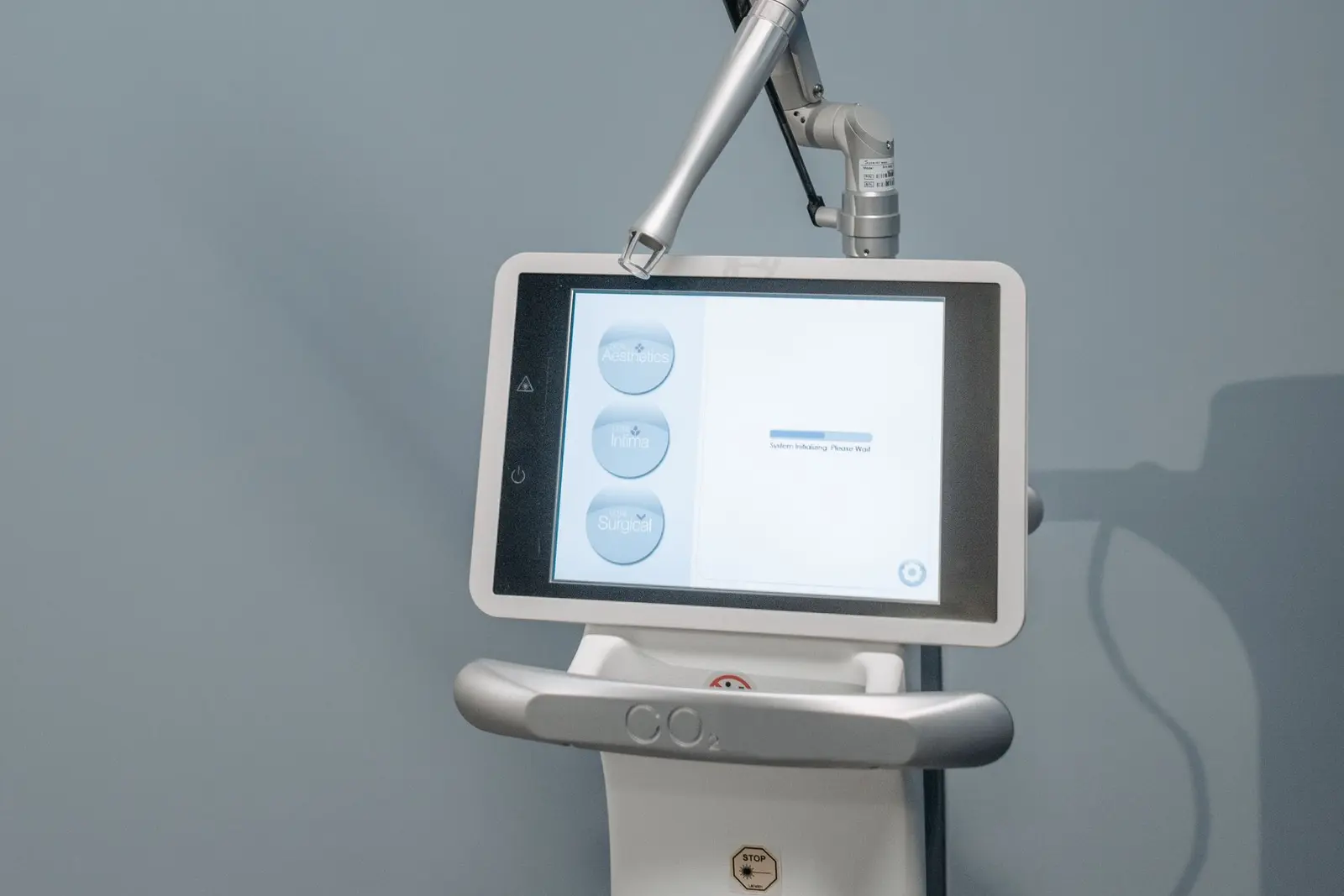
Lasers are among the tools whose name has become familiar in gum procedures in recent years. A dental laser is a device that delivers light energy at specific wavelengths to the tissue, and it can be used as an auxiliary tool in certain soft tissue procedures. The presence of a laser does not, however, make it a treatment method on its own; where and for what purpose it is used depends on clinical assessment.
This article outlines what laser-assisted gum procedures are, the situations in which they may be considered in periodontology, and how they are assessed alongside conventional methods. The content is for information purposes; which method is appropriate can only be determined through an examination.
What Is a Laser and Where Does It Sit in Periodontology?
The lasers used in dentistry operate at different wavelengths and interact with tissue in different ways. Soft tissue lasers can be used for cutting and contouring tissues such as the gum, while some laser types are also used in applications involving hard tissue. Each type has its own behaviour, field of use and limits.
In periodontology, a laser is usually positioned not as a stand-alone treatment but as a tool that can be used in specific procedures. The basis of gum health runs through the examination, scaling and other approaches carried out within gum treatment; a laser may come into play within this whole in cases found suitable.
In Which Situations May It Be Considered?
One of the main areas where lasers may be considered in gum procedures is gum contouring. In situations such as adjusting asymmetries along the gum line or addressing excess gum tissue that affects how long the teeth appear, lasers are among the tools that can be used for soft tissue adjustment.
Another area is gum pigmentation. In procedures dealing with dark discolouration linked to melanin accumulation in the gum, the laser is among the options that can be used. Beyond these, lasers may also be used in lip and tongue tie (frenulum) adjustments and in some minor soft tissue procedures. Which tool suits which situation is determined by the dentist according to the structure of the tissue and the purpose of the procedure.
Gum Contouring and Smile Design
How much of the gum shows when smiling varies from person to person. Gums that show more than expected can create the picture commonly known as a gummy smile; its causes and assessment framework are discussed in detail in the gummy smile article.
When adjusting gum levels comes up in smile design planning, different methods are considered for soft tissue adjustment. A laser may be an option in limited adjustments involving only the gum, while surgical approaches are required where the bone level also needs to be adjusted along with the gum. Which picture calls for which approach becomes clear only through clinical and radiographic assessment.
Assessed Alongside Conventional Methods
In periodontology, the laser is regarded not as a replacement for conventional methods but as a tool that can be used in specific procedures. The basis of managing gum disease still consists of approaches such as examination, scaling and root planing; the laser does not take the place of this foundation.
Where more than one tool can be used for the same procedure, no absolute ranking is made between the options; each method has its own behaviour, field of application and limits. Which tool is chosen is determined by weighing the condition of the tissue, the scope of the procedure and the person's general health history together.
How Is the Indication Determined?
Whether a laser-assisted gum procedure is appropriate cannot be known before an examination. The assessment considers gum health, the thickness and structure of the tissue, the depth of any pigmentation, and the relationship of the gum margin to the tooth and bone. Where active gum inflammation is present, the priority is usually to bring the inflammatory picture under control first.
The process therefore starts not with which device will be used, but with what the tissue and the overall picture are. The indication is determined by the dentist after a clinical examination and any imaging found necessary; two situations that look alike may call for different approaches.
In Summary
Laser-assisted gum procedures cover areas such as gum contouring, pigmentation and some minor soft tissue adjustments. The laser is an auxiliary tool in these procedures; which method is appropriate depends on the individual picture, and outcomes vary from person to person.
This content has been prepared for general information purposes and does not replace an individual assessment; consult your dentist for accurate information.
This content is for informational purposes only and does not replace an examination by a dentist. The process and results vary from person to person.
Write to us with your questions
You can get in touch via WhatsApp, phone or email for information about treatments and the process.