
Mouthwash and Home Remedies for Gum Inflammation

Summary
Where mouthwash fits in gum inflammation, when salt water and antiseptic solutions come up, and where home measures reach their limit.
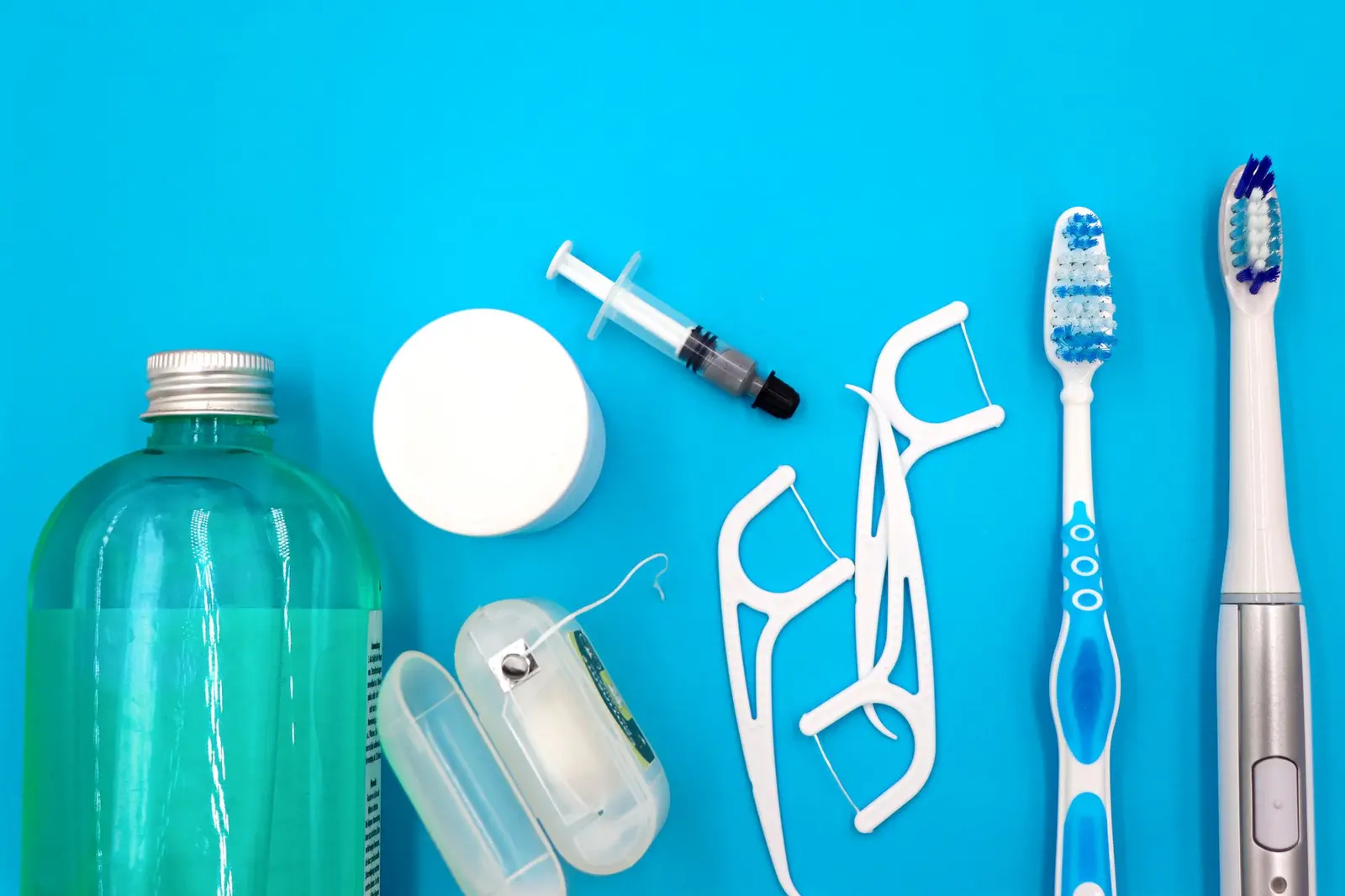
When the gums start bleeding, the first question is usually what can be done at home. Crowded mouthwash shelves and advice from friends make that answer harder to see.
This article looks at where rinsing fits in gum inflammation, when salt water or antiseptic solutions come up, and where home measures reach their limit. Your gum treatment plan is decided after an examination.
What a Rinse Can and Cannot Do
Gum inflammation is driven by the microbial layer that builds up on tooth surfaces. Ingredients in a rinse can reach its surface, but penetration into mature deposits and into the gum pocket is limited.
The main message here is simple: rinsing does not replace mechanical cleaning. Deposits and calculus attached to the tooth are removed through procedures such as scaling; a rinse only supports them.
When Does Salt Water Rinsing Come Up?
Lukewarm salt water is mostly suggested after surgical procedures, once the first days have passed and on a clinician's advice. It may help keep the area gently clean.
It is not a treatment for everyday gum inflammation. Salt water may bring brief relief, but as long as the underlying cause remains, the picture can continue.
Antiseptic Rinses: Defined and Time-Limited
A daily cosmetic mouthwash and an antiseptic solution recommended by a clinician are not the same thing. Chlorhexidine-based solutions are usually advised after a procedure or for a defined period.
With prolonged use, staining of tooth surfaces and a temporary change in taste can occur. An antiseptic rinse should therefore not become an open-ended habit; the duration is set and reviewed by the clinician.
About Herbal and Homemade Mixtures
Mixtures made with clove, sage, vinegar or baking soda come up often. Some may be harmless, but the evidence for their effect on gum inflammation is limited.
The real risk lies elsewhere: something that quietly dampens a symptom can delay the visit. Less bleeding does not always mean the problem is resolved, and gum disease underneath may keep progressing.
Mouthwash and Gum Recession
A common question when gum recession is noticed is whether a rinse can undo it. Tissue that has receded is not expected to return to its former position through rinsing.
The aim here is to address what drives the recession further: removing deposits, reviewing brushing habits and assessing factors such as clenching. The approach is planned from examination findings.
Three Things That Genuinely Help at Home
What can be done at home centres on daily cleaning rather than on rinsing. Correct brushing technique means cleaning along the gum line gently and regularly; method matters more than force.
The second is the space between the teeth, which a brush cannot reach and floss or an interdental brush can. The third is smoking, which can affect gum tissue and healing unfavourably.
Which Findings Should Not Wait?
Bleeding that has lasted for weeks, swelling and redness of the gum, a bad taste that does not go away, discharge at the gum margin or a loose tooth should be assessed without waiting.
A rinse can be a useful helper in the right place, but it does not replace an examination that identifies the cause. If your gums are troubling you, you can contact your clinician for an assessment.
This content is for informational purposes only and does not replace an examination by a dentist. The process and results vary from person to person.
Write to us with your questions
You can get in touch via WhatsApp, phone or email for information about treatments and the process.