
What Is a Jaw Cyst?

Summary
General information on what jaw cysts are, their common types, how they often develop without symptoms, and how they are noticed on radiographs.
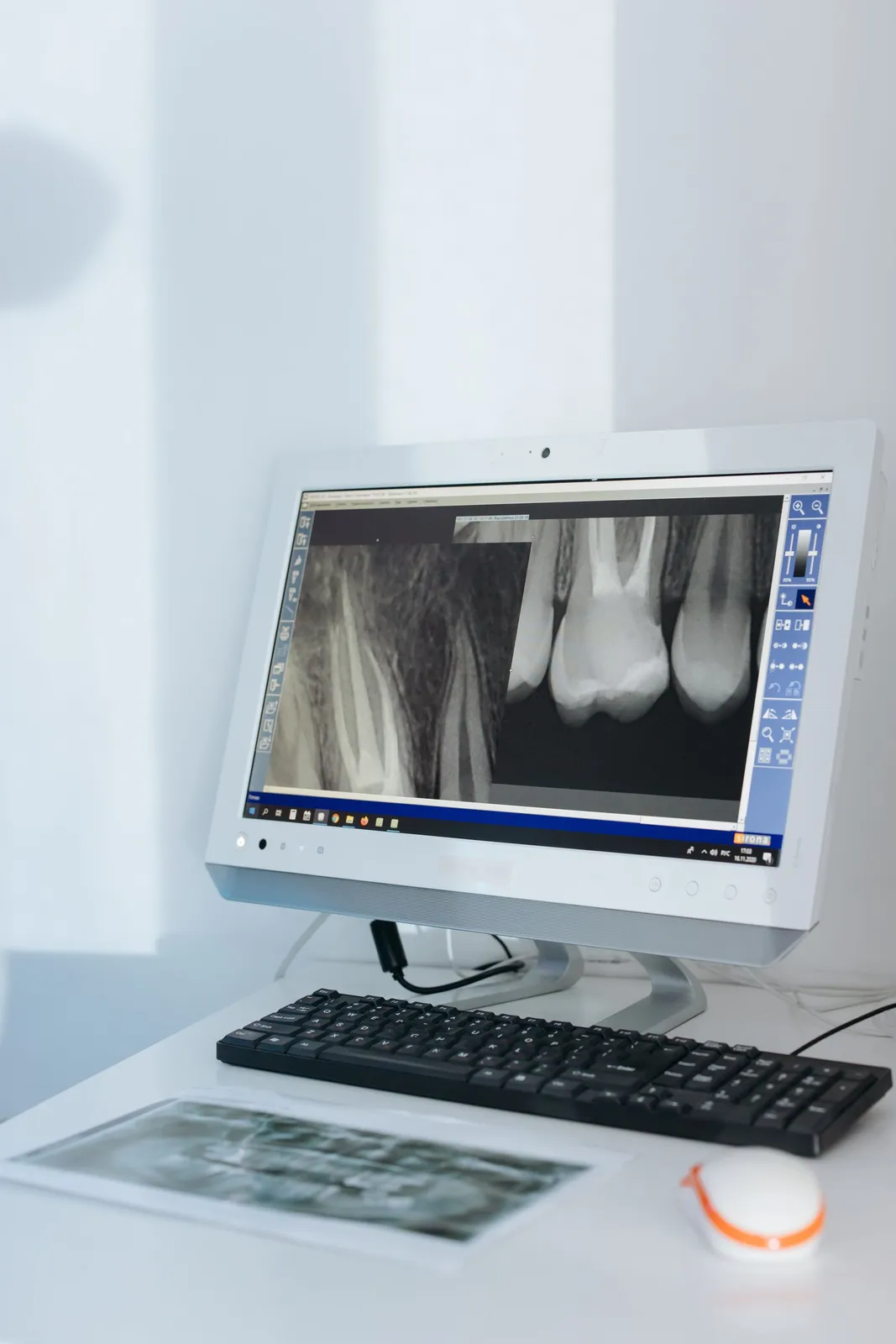
A jaw cyst is a sac-like formation that can develop within the jawbone or around the roots of teeth, surrounded by a thin membrane and filled with fluid or a semi-solid material. Most cysts are benign; however, they can grow over time and affect the bone and neighboring structures in the area where they are located.
This article outlines, in general terms, what jaw cysts are, their common types, why they often develop without symptoms and how they are noticed. The content is for information only; an individual assessment is made through examination, and consulting your dentist for accurate information is recommended.
Types of Jaw Cysts
Different types of cysts can be seen in the mouth and jaw region, and identifying the type matters because it affects the treatment plan. Among the most common, a radicular (periapical) cyst usually develops in connection with an inflammatory process around the root tip of a tooth that has lost its vitality due to decay or trauma.
A dentigerous (follicular) cyst, on the other hand, can form around the crown of an unerupted or impacted tooth. Beyond these, developmental cysts and cysts of other origins have also been described. The type, location and size of a cyst vary from person to person; a definitive distinction is clarified through radiographic and pathological evaluation.
Often Symptomless, Noticed on Radiographs
Jaw cysts often progress silently and can grow without causing any pain or symptoms. For this reason, they are frequently noticed incidentally on X-rays taken for another purpose. As a cyst grows, findings such as swelling in the area, a feeling of fullness, or a change in tooth position may appear.
A panoramic X-ray is the first step in assessing the location and general boundaries of the cyst. When the size, the relationship with neighboring anatomical structures (nerve canal, sinus cavity, tooth roots) and the three-dimensional boundaries need to be seen more clearly, cone-beam computed tomography (CBCT) may be used.
Surgical Treatment and Pathological Examination
The general approach in treating jaw cysts is to remove the cyst surgically or, in the case of large cysts, to first reduce it by emptying it. The procedure is usually performed under local anesthesia, with care taken to protect the surrounding bone, tooth roots and nerve structures. Which method is suitable is determined by examination, according to the type, size and location of the cyst.
The surgically removed tissue is routinely sent for pathological examination; this makes it possible to determine the type of the formation with certainty and to assess whether it is benign. The healing process and the frequency of follow-up vary from person to person. This content is for general information and is not a substitute for examination; consult your dentist for accurate information.
This content is for informational purposes only and does not replace an examination by a dentist. The process and results vary from person to person.
Reading this while planning treatment in Turkey? See the Denizli visit planner and the dental tourism guides.
Related Treatments
Write to us with your questions
You can get in touch via WhatsApp, phone or email for information about treatments and the process.