
Implant Prosthesis and the Healing Abutment: The Stage After Surgery

Summary
A healing abutment is a small component screwed onto the implant that guides the shape of the gum, preparing the emergence profile for the future restoration. The prosthetic stage after surgery moves through the healing abutment, a temporary prosthesis in suitable cases, the impression and the final superstructure. Timing and the order of these steps vary from person to person and are determined by clinical examination; consult your dentist.
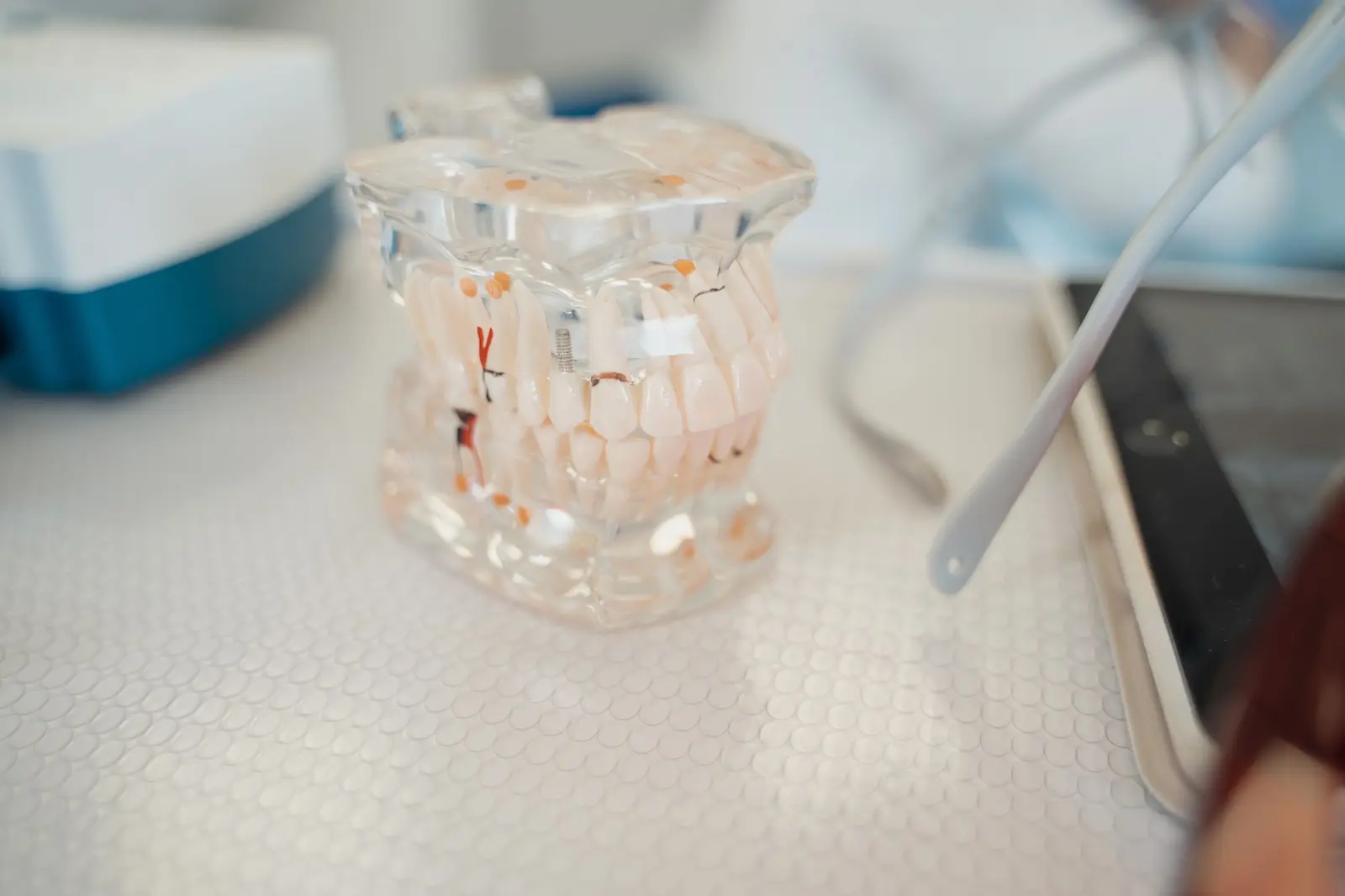
Implants are usually discussed in terms of the surgery. The superstructure that lets one function is prepared in a separate stage that begins afterwards.
The steps as a whole are covered in the dental implant treatment process; this article deals only with the prosthetic phase that follows.
What Is a Healing Abutment and When Is It Placed?
A healing abutment, also called a gum former, is a small component screwed onto the implant that guides the shape of the gum around it. It prepares the emergence profile the superstructure will pass through.
Timing depends on the protocol. In a one-stage approach it is fitted in the same session as the implant; in a two-stage approach the implant is covered by the gum and the abutment follows later. The route is decided during implant surgery planning.
How It Feels and How It Is Cleaned
Tenderness, a mild sense of pressure, or the tongue finding the area may be noticed at first; the gum margin takes time to adapt.
Gentle cleaning with a soft brush and the aids your clinician recommends is appropriate. If the abutment feels loose or discomfort persists, contact the clinic rather than waiting for the next appointment.
Temporary Prostheses: Why and When
Where the implant sits in a visible area, a temporary superstructure may be considered while healing continues.
It is not used in every case. In cases found suitable it is planned by weighing the bone, implant stability and the chewing forces involved. It does not replace the final restoration.
The Impression Stage and the Final Restoration
The tissues are allowed to become stable first. Once the gum has settled and healing has reached the expected point, the impression is taken.
The impression records the position of the implant and the gum profile around it. The superstructure made from it is tried in, the bite checked, and adjustments made before fitting.
How the Material Is Decided
Options include metal-supported ceramic and all-ceramic or zirconia-based structures. None is superior in absolute terms; each has its own behaviour and limits.
The decision weighs the position of the site, the opposing teeth, chewing forces and aesthetic expectation, as part of the prosthetic assessment.
Screw-Retained and Cement-Retained
In screw retention the superstructure is held by a screw and can be removed and refitted by the clinician. In cement retention it is fixed with a luting material, and it matters that no excess remains at the gum margin.
Care and Check-Ups Afterwards
The process does not end when the superstructure is fitted. Gum and bone health around the implant depends on daily cleaning and regular check-ups; see care after implant treatment.
Where cleaning becomes difficult, an inflammatory process may develop around the implant; that picture is discussed in peri-implant inflammation.
In Summary
The order of the stages and which options suit become clear only after clinical examination and any imaging considered necessary.
This content is for general information and does not replace an individual assessment; consult your dentist about your situation.
This content is for informational purposes only and does not replace an examination by a dentist. The process and results vary from person to person.
Reading this while planning treatment in Turkey? See the Denizli visit planner and the dental tourism guides.
Write to us with your questions
You can get in touch via WhatsApp, phone or email for information about treatments and the process.