
Dental Implant Treatment Guide: From Assessment to Long-Term Care

Summary
Dental implant treatment consists of assessment through examination and imaging, preparatory procedures for bone deficiency where needed, surgical placement of the implant, a healing period (osseointegration) and the prosthetic stage. How the process is planned and how long it takes vary from person to person; suitability is determined through examination. The long-term health of implants is closely related to regular oral care and periodic check-ups.
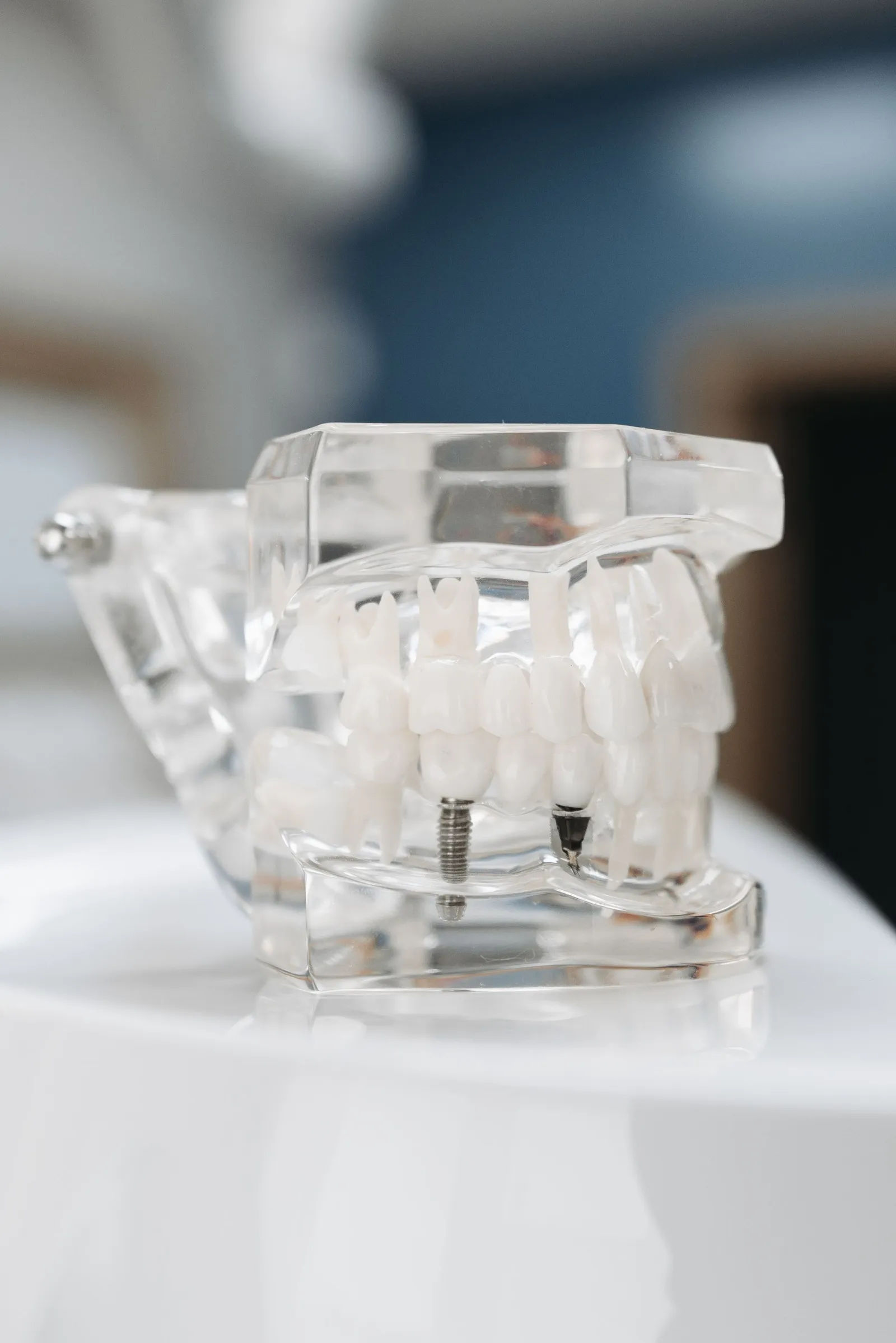
A dental implant is a small, usually titanium-based screw-shaped structure placed within the jawbone in place of a missing tooth and intended to take on the function of a natural tooth root. Together with the crown or prosthesis prepared on top of it, the aim is to restore chewing, speech and the appearance of the smile. Implant treatment is not a single procedure; it is a whole made up of consecutive stages — assessment and imaging, preparation for bone deficiency where needed, surgical placement, healing, the prosthetic period and long-term care.
This guide brings the entire journey of implant treatment together within a single framework and points to articles that examine each stage in detail. The content is intended for general information only; whether the treatment is suitable for you, how many stages it will involve and how long it will take vary from person to person. An individual assessment can only be made through examination; consult your dentist for accurate information.
Missing Teeth and Who May Be Considered for an Implant
A missing tooth is rarely only a matter of appearance. Over time, neighboring teeth can tilt into the gap, the opposing tooth can drift toward the space and the distribution of chewing forces can change. In the period following an extraction, volume loss can also be observed in the jawbone in that area. These possible effects of tooth loss on oral health are examined in detail in the article on why missing teeth should be treated.
For an implant to be considered as an option, factors such as general health, the amount and density of the jawbone, gum health and the completion of jaw development are taken into account. Certain uncontrolled systemic diseases, some medications or smoking can affect planning. Which conditions are looked for and when additional evaluation is needed are discussed in the article on who dental implants can be applied to; suitability is in every case determined through examination.
Assessment and Imaging
Treatment planning begins with an intraoral examination and a radiographic evaluation. During the examination, the condition of the gums, the neighboring teeth and the bite relationship are assessed; the general health history and any medications are reviewed. While a panoramic X-ray provides an overall view of the jaw structure, cone-beam computed tomography may be used when the bone volume needs to be examined in three dimensions or when neighboring structures such as the nerve canal and the sinus cavity require detailed imaging. When each method is preferred is discussed in the article on panoramic X-ray and dental tomography.
Imaging findings guide how many implants are needed, in which areas and at which angle they can be placed, and whether additional preparatory procedures are required. Because gum health matters for the long-term course of an implant, gum treatment before the implant may be included in the plan when considered necessary. The treatment schedule is created individually by bringing all of these findings together.
Methods Used When Bone Is Insufficient
The jawbone may not always have sufficient volume for an implant. Teeth that have been missing for a long time, previous gum disease or the natural volume loss seen in bone after an extraction are among the main reasons. In such cases, supporting the deficient area with a bone graft may come onto the agenda; graft materials, the stages of the procedure and the healing period are described in the article on bone grafting before implants.
The back region of the upper jaw is assessed separately in this respect; in the period following tooth loss, the sinus cavity can expand downward and the bone height required for an implant can decrease. In this situation, the sinus lifting procedure, which aims to raise the sinus floor, is among the options. Whether grafting or sinus lifting is needed, and whether the procedure is performed in the same session as the implant or as a separate stage, is determined according to the examination and imaging results.
The Surgical Process and Timing Options
Placing the implant into the jawbone is a surgical procedure usually performed under local anesthesia, with care taken to protect the surrounding tissues; its scope is summarized on the implant surgery page. After placement, a healing period of generally several months is needed for the implant to fuse with the bone (osseointegration); its length varies according to bone structure and individual healing characteristics. The full sequence of steps from assessment to prosthesis delivery is described in the article on the dental implant treatment process.
There are different approaches to timing. In the classical approach, the implant is placed after the extraction site has been allowed to heal; under suitable conditions, placement can also be performed in the same session as the extraction. The circumstances in which this option is considered are discussed in the article on immediate implants after extraction. Which timing is appropriate varies from person to person according to the reason for the extraction, the condition of the bone and soft tissue in the area, and whether infection is present.
Solutions for a Fully Edentulous Jaw
When all the teeth in a jaw are missing, solutions covering the entire arch can be planned with prostheses fixed onto a certain number of implants. This approach is among the options considered for people who have difficulty using removable dentures or who are looking for a fixed solution. The number of implants, the prosthesis design and the stages of treatment are discussed in the article on full-arch fixed prostheses on implants.
In full-arch treatments, the prosthesis may be fixed, or removable designs supported by implants can also be planned. Which design is appropriate varies according to the amount of bone, the relationship between the jaws, general health and the person's expectations. In treatments of this scope, it is advisable for planning to be carried out together with imaging findings and for the options to be reviewed with the dentist.
The Prosthetic Stage and the Healing Period
Once integration is complete, the superstructure that will form the visible part of the tooth is prepared on the implant. During this period an impression is taken, the connecting components (abutments) that link the implant and the crown are placed, and the restoration is adjusted to fit the person's oral structure and bite. The prosthetic options, the sequence of appointments and how the healing process relates to the prosthetic timeline are covered in detail in the article on implant-supported prostheses and healing.
In the first days after surgery, mild pain, swelling or sensitivity may be seen in the area; these findings can mostly be managed with the measures recommended by the dentist and subside over time. Which situations are considered ordinary and which findings make it appropriate to contact the dentist are described in the article on pain after implants. The pace of healing and the level of comfort vary from person to person; recommendations are personalized according to examination findings.
Long-Term Care and Possible Risks
The long-term health of implants depends largely on daily oral care and regular dental check-ups. Brushing with the correct technique, interdental cleaning and using the auxiliary tools recommended by your dentist support the protection of the tissues around the implant. The frequency of check-ups is planned individually. How daily care can be organized and what to pay attention to are discussed in the article on care after implants.
Inflammatory processes similar to gum disease around natural teeth can develop in the tissues around an implant. The definition, signs and management of this picture are covered in the article on peri-implant inflammation (peri-implantitis). More rarely, close monitoring of implant-related problems or removal of the implant may come onto the agenda; these possibilities are examined in the article on implant problems and removal. This guide has been prepared for general information and is not a substitute for examination; consult your dentist for planning suited to you.
This content is for informational purposes only and does not replace an examination by a dentist. The process and results vary from person to person.
Reading this while planning treatment in Turkey? See the Denizli visit planner and the dental tourism guides.
Write to us with your questions
You can get in touch via WhatsApp, phone or email for information about treatments and the process.